

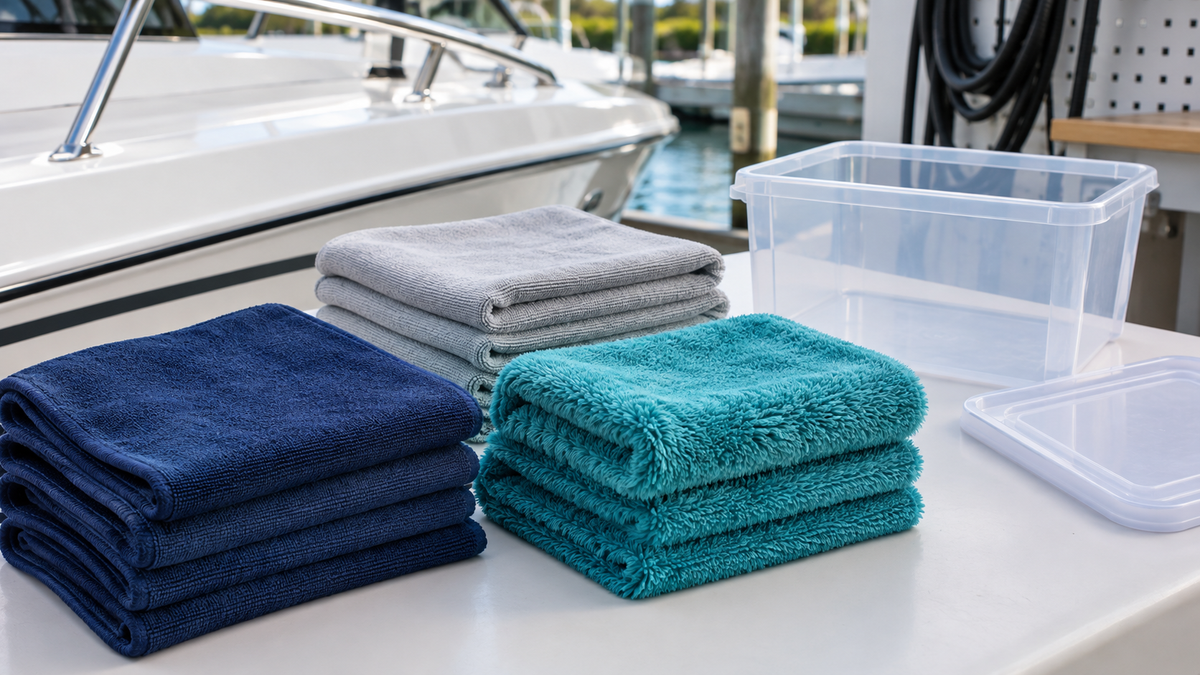
AI-generated editorial illustration, not a product photograph or cleaning test.
The towel is part of the detailing process, not an afterthought. A cloth used for a dirty cleanup should not become your next finishing towel simply because it is nearby.
A useful routine starts before laundry day: give towels clear jobs, keep used ones separate and follow the care instructions for the cloth and the products it has touched.
Sort by job before you start
Set aside separate towels for tasks such as drying, removing polishing residue and applying or buffing protection. Use different colors or labeled containers so the system is easy to follow when someone else helps.
The labels identify a job, not a quality ranking. A thick towel is not automatically the right choice for every surface, and a clean-looking towel is not proof that its previous product residue is gone.
Keep a spare within reach. If a towel drops onto the ground or picks up visible grit, remove it from the working pile rather than brushing it off and continuing.
For the larger routine, see our after-use boat washing guide.
Check the care instructions before washing
Read the towel’s washing and drying directions. Then consider what it was used with. A general microfiber laundry routine is not permission to wash every chemical-contaminated cloth in a household machine.
Do not put cloths contaminated with gasoline, flammable solvents or other combustible substances into a household washer or dryer. Follow the product’s handling and disposal directions and the appliance’s safety instructions. Keep unfamiliar chemical residues out of the ordinary laundry load until you have confirmed the correct handling. Follow any specific instructions for towels used with a curing coating.
For ordinary washable detailing towels, choose a detergent permitted by the towel maker and use the recommended amount. Do not assume extra detergent will solve every residue problem.
Keep lint and softeners out of the load
Wash microfiber separately from cotton towels and other lint-producing laundry. Microfiber can collect that lint, leaving you with a cloth that sheds it during the next job.
Avoid fabric softener and dryer sheets. Their residues can interfere with the towel’s intended performance. Check the detergent label as well as the bottle beside the washing machine.
Use the water temperature specified by the towel maker. Warm or cold washing is common guidance, but there is no reason to invent one temperature or detergent dose for every cloth. Follow restrictions on bleach and other laundry additives.
Dry within the towel’s limits
Use the permitted drying method. Low-heat or no-heat tumble drying and air-drying are common options; the towel’s instructions decide which is appropriate.
Do not use a hotter setting simply to finish sooner, and do not iron the towels. Let them dry fully before putting them back into storage.
After drying, inspect the working surfaces for trapped particles, stiff patches or damage. A wash cycle alone is not confirmation that a towel is ready for a delicate finish. If its condition is uncertain, keep it out of the finishing pile and ask the supplier for guidance.
Put clean towels back into a clear system
Store clean, dry towels away from dust and used cloths. Return them to the same task groups rather than one mixed bag.
Before the next session, check the towel, the product directions and the surface you are working on. The same principle applies to machine accessories: our polishing-pad selection guide explains why the finish, tool and pad need to work together.
A simple towel system makes that preparation easier. Choose the right cloth, keep track of its job, clean it as directed and inspect it before reuse.
Share:
How to clean and dry a boat cover before storage