

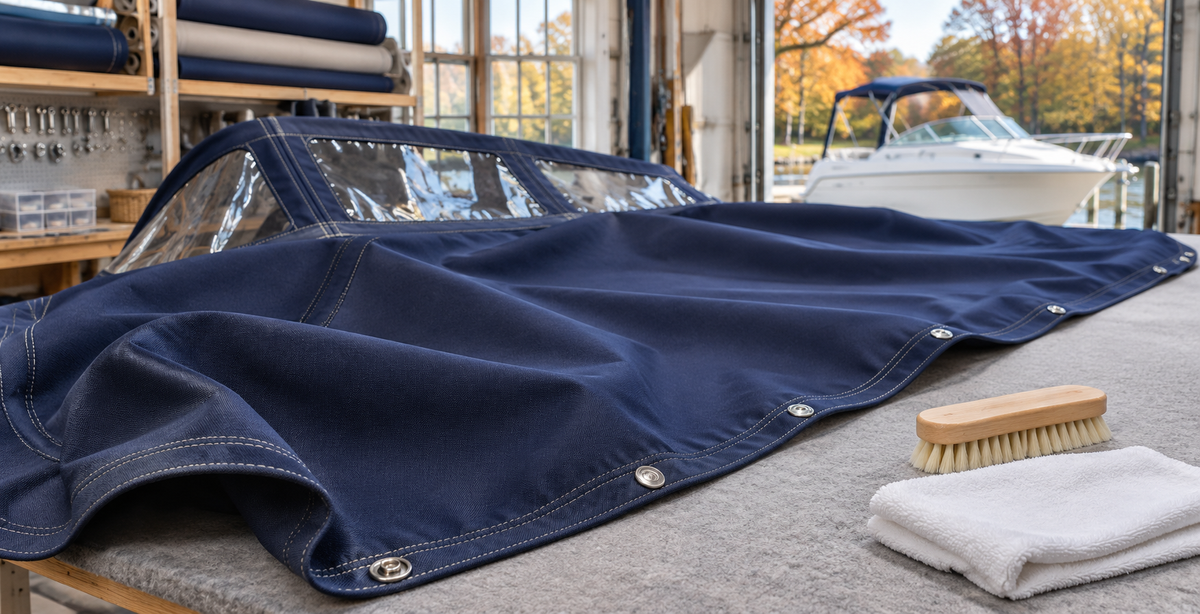
AI-generated editorial illustration, not a product test or cleaning result.
A boat cover deserves its own place on the end-of-season checklist. Before you fold it away, identify the material, follow its cleaning instructions and leave enough time for it to dry completely.
This guide is for a removable cover you plan to put away. A cover staying on the boat for storage also needs the correct fit, support and ventilation.
Start with the material, not the cleaner
“Marine canvas” does not describe one universal material. Woven fabrics, coated fabrics and clear enclosure panels can require different care.
Find the cover label, purchase records or fabricator’s instructions. Check the recommended cleaner, tools, washing position and drying method before starting. If you cannot identify the material, ask the cover maker rather than choosing a product by its strength or the word “marine.”
Do not assume a cleaner approved for your boat seats is suitable for its cover or clear panels.
Clean gently and rinse thoroughly
For woven canvas whose care instructions permit this approach, remove loose dirt first, then rinse with clean water. Use the specified mild cleaning solution and a soft brush, following the stated dilution and contact time.
Work on a manageable area so you can see what you have cleaned and rinsed. Rinse thoroughly until the cleaning residue is gone, then allow the fabric to air-dry.
A stubborn mark is a reason to check the material’s stain-treatment instructions, not automatically increase concentration or scrubbing pressure. Cleaning guidance that permits a treatment on one fabric does not establish that it is safe for another.
Some covers should be washed and dried fitted to their frames. Others can be removed for cleaning. Follow the instructions for your cover instead of assuming every piece should go into a bucket or washing machine.
Give clear panels separate care
Treat any transparent enclosure panels as a separate surface. Their coatings may require specifically approved cleaners and soft cloths, and trapped grit can scratch them.
Keep the canvas brush away from the clear panels. Follow the panel supplier’s directions for rinsing, cleaning and handling, including any restrictions on rolling or stacking. Do not assume that folding the fabric is also appropriate for an attached clear window.
If the cover and panel instructions differ, ask the fabricator how to clean the assembled piece.
Finish drying before packing
Do not fold and bag a damp cover. Check seams, hems and folded areas as well as the broad fabric panels before putting it away.
Use the manufacturer’s storage method and a dry, ventilated location. Where the instructions prohibit plastic storage bags, do not substitute one simply because it keeps dust out.
If the cover is remaining on the boat, confirm that its supports and fit prevent water from collecting. Cleaning does not correct a poor fit or damaged support.
For the wider storage routine, see our guide to reducing mold and mildew during boat storage.
Leave yourself a useful record
Before packing, take a few photographs and note any damaged stitching, fasteners or areas that need a fabricator’s attention. Save the material name and care instructions with those pictures.
Record the cleaning date and product used in your boat-care log. That gives you a practical starting point next season instead of another round of guesswork.
The goal is simple: put the cover away clean, completely dry and stored as its maker recommends.
Share:
Pink stains on boat seats: why more scrubbing may not help