

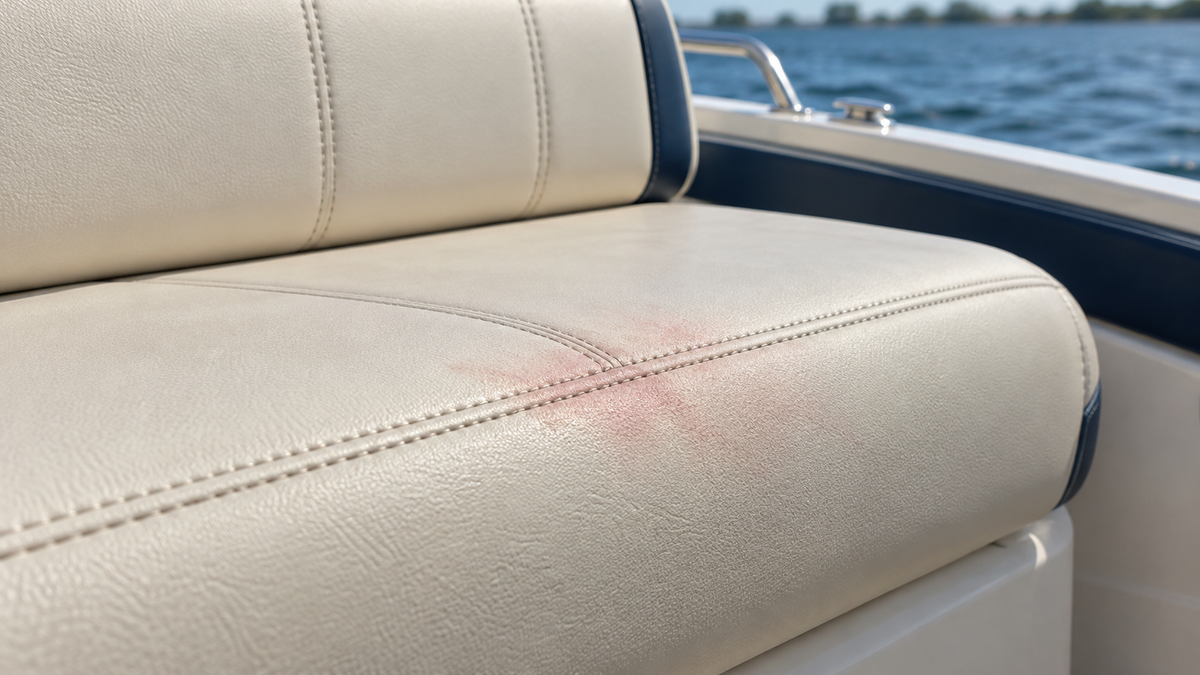
AI-generated illustration; not a photograph of a diagnosed stain or a treatment result.
A pink mark remains on a boat seat after ordinary cleaning. Before reaching for a stronger cleaner, consider whether the discoloration is something that can be washed off the surface at all.
One documented cause of pink staining involves colored byproducts from microorganisms within the seat assembly. That calls for a different assessment from a fresh spill. The useful next move is to identify the material and the problem, rather than keep increasing cleaning strength.
What can happen below the vinyl
A marine seat is an assembly: upholstery, backing, cushioning, seams and supporting components. The visible vinyl is only part of it.
In one documented form of pink staining, bacteria produce a colored byproduct that can migrate into vinyl. Moisture and contamination within cushioning or other seat components can therefore matter even when the exposed surface looks clean.
This helps explain why surface cleaning may not remove the discoloration. It also explains why resistance to microbial growth in the vinyl itself does not guarantee that the whole seat assembly cannot develop a stain.
Color alone is not a diagnosis. A pink-looking mark does not establish which organism, material or process caused it. Treat the explanation as a reason to investigate, not a way to identify your seat’s problem from a photograph.
Clean within the material’s limits
Use the boat builder’s or upholstery manufacturer’s current cleaning instructions for the exact material. A method permitted for one vinyl or topcoat is not automatically suitable for another.
If an approved cleaning method is appropriate, test it in an inconspicuous area, follow the product directions and remove residue as instructed. Do not improvise a stronger concentration or extend contact time because a stain remains.
For the ordinary cleaning routine, use our vinyl boat-seat care guide. This article addresses the narrower question of persistent pink discoloration after routine care.
Give the specialist a useful record
Before trying another treatment, collect:
- The boat’s model and year, plus the upholstery material name if available.
- A close-up photograph and a wider view showing the stain’s location.
- When the mark appeared and whether it changes or returns.
- Any known soaking, leaks or prolonged damp storage.
- The names of products already used and how they were applied.
Ask the boat builder or upholstery specialist whether the seat needs an inspection beyond its exposed surface. They can advise whether cleaning, a specialized treatment, repair or replacement is appropriate. Do not assume that every pink mark requires replacement—or that another bottle will remove it.
Address moisture without inventing a repair
Seat construction and drying matter. Keep the upholstery clean according to its care instructions, and raise persistent dampness, trapped water or damaged seams with the builder or upholsterer.
Avoid cutting vents, altering seams or dismantling bonded upholstery based on a general cleaning article. Those decisions depend on how the seat was built.
Our boat-storage moisture guide covers broader storage habits. Those habits support ongoing care; they are not a treatment claim for an existing pink stain.
Know what a product can realistically do
A cleaner’s surface-cleaning purpose does not establish that it can remove discoloration within a material. A protectant should not be assumed to repair that discoloration either.
Before buying a treatment, ask what kind of stain it addresses, which upholstery materials it is suitable for, and what limitations apply. SKWOL’s approach is to match the care to the actual problem. Sometimes the most useful advice is to stop scrubbing and get the seat assessed.
Share:
How to keep a useful boat-care log
How to clean and dry a boat cover before storage