

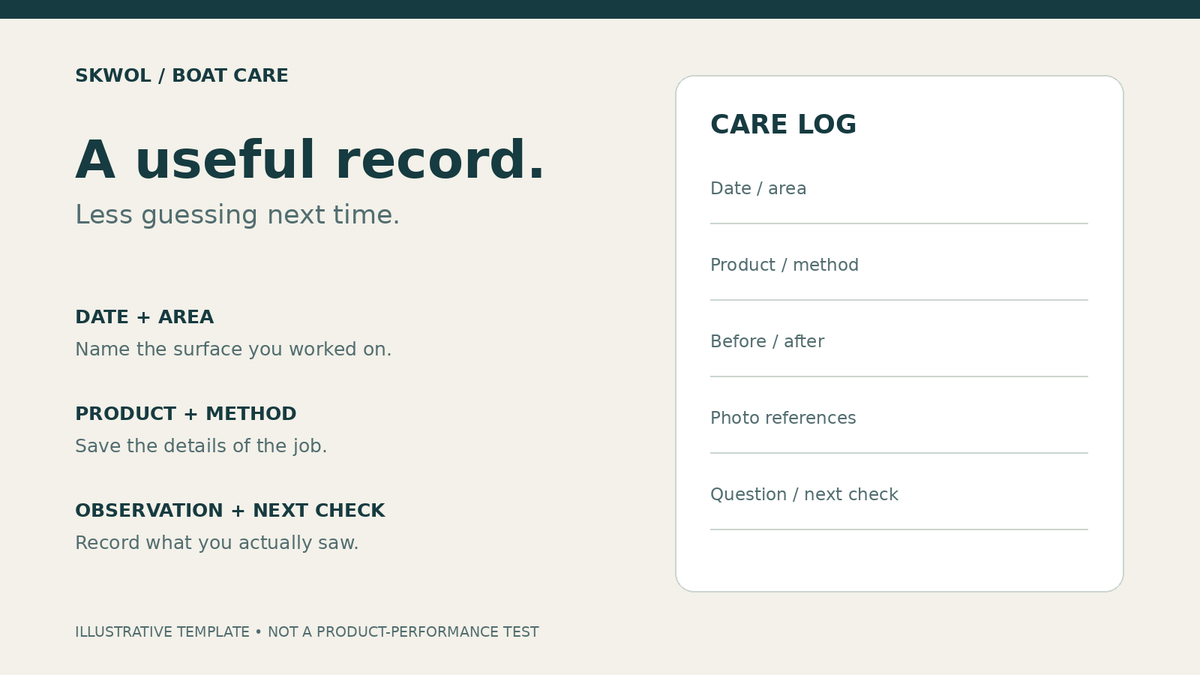
A simple record for your next care session. Illustrative template, not a product-performance test.
When did you last protect the hull? Which cleaner did you use on that seat? Was the mark beside the cleat already there?
A short boat-care log gives those questions somewhere to land. Keep it in a notebook or a note on your phone. The aim is a clear record of what you did and what you observed, without turning routine care into paperwork.
Give each area a clear name
“Cleaned the boat” leaves a lot out. Name the area so you can find it again: port hull beside the registration number, forward seat cushion, or cockpit hatch.
Record the surface or finish if you know it. If you do not, write “not confirmed” rather than guessing. Keep any finish instructions, coating details, and professional service records with the log. A previous entry is useful history, but it does not establish that a product is suitable for every surface nearby.
Save the details you would otherwise forget
For each care session, note:
- The date and area worked on.
- The exact product and tool used.
- The dilution or application method, where relevant, as directed for that job.
- What you noticed before and after.
- A photo reference and any question still unresolved.
Record what actually happened. If you did not measure a dilution or time an application, do not add a precise number later from memory. Save the directions you followed, or a clear label photo, alongside the entry.
For a routine wash, our after-use boat washing guide covers the job itself. The log simply preserves the details of your session.
Take photos you can compare
Take one wider photo to locate the area, then a closer view of the mark or finish. Repeat the camera position and lighting as closely as practical when you photograph it again.
Lighting can reveal or conceal surface texture and damage. A bright reflection in one photograph and flat shade in another make an awkward comparison. Note whether the surface is wet or dry, keep the original images, and avoid filters that change their appearance.
Use photos as a record of visible condition. They do not establish the cause of a mark or prove a product’s protective performance.
Separate the observation from the explanation
“Grey mark remains beside the seam after cleaning” is a useful observation. “The upholstery is permanently damaged” is a diagnosis that may need more information.
Keep those separate. Describe where the change is, what it looks like, and whether it changed during the work. If you need help, send that record with the relevant material information and directions used.
For seating, start with our vinyl boat-seat cleaning guide. If the material or a persistent mark is uncertain, ask the upholstery supplier before escalating the treatment.
Copy this simple entry
Date:
Area and known surface/finish:
Condition before:
Product, tool, and directions followed:
Condition after:
Photo names:
Question or next check:
Keep “next check” separate from “next treatment.” Noticing a change does not automatically mean another product application is due. Check the applicable care instructions before deciding what to do.
Keep the record useful
Add an entry after a care session or when you notice a meaningful change. You do not need a daily report when nothing has happened.
Before a detailer works on the boat, share the relevant history. Afterwards, add their description of the work and any care instructions they provide. Over time, the log becomes a practical handover between you, anyone helping with maintenance, and the next person who needs to understand the finish.
Start with the next job. A dated note and a few clear photos are enough to begin.
Share:
How to clean vinyl boat seats without overdoing it
Pink stains on boat seats: why more scrubbing may not help