

Choose boat protection around your finish, the preparation you can complete, and the maintenance you will actually do. A wax, spray sealant, and dedicated cured ceramic coating can involve very different application processes. The word ceramic alone does not tell you how long a product lasts, which surfaces it suits, or how much preparation it needs.
For a sound, glossy finish, a compatible spray sealant can make protection straightforward to fit into regular care. A dedicated coating deserves a closer look when you can meet its preparation and curing requirements. Traditional wax remains an option on surfaces where the boat or finish manufacturer recommends it.
Start with the surface you want to protect
Confirm whether you are working on gelcoat, marine paint, a wrap, glass, metal, or plastic. Also check whether an existing coating has its own maintenance requirements. Products sold for boats are not automatically interchangeable across every part of a boat.
Paint is a useful example. Awlgrip recommends its own hand-applied protective polymer and advises against traditional waxes on its finishes. Follow the instructions for your exact paint system before choosing a product from any of the categories below.
Walking surfaces need a separate decision. Use a treatment explicitly approved for the relevant deck or non-skid surface. General-purpose gloss and slickness are not useful selection criteria where people need secure footing.
What to expect from boat wax
Boat wax is a product category with several formats, including liquids, pastes, and sprays. Some products focus on protection; cleaner waxes can add cleaning or abrasive action. Check the label before applying one to a finish that should not be polished.
Wax can suit owners who are comfortable with its application process and who can inspect and renew it as directed. Convenience also varies within the category: Meguiar's, for example, sells a marine spray wax for use on wet or dry surfaces. Comparing every wax with every ceramic spray as though one is always labor-intensive misses those differences.
Avoid choosing purely by how rich the finish looks immediately afterward. Evaluate cleanup, compatibility, the maintenance instructions, and the amount of work needed to keep the boat in the condition you want.
What to expect from ceramic sprays and sealants
Ceramic sprays and sealants include products intended for straightforward wash-day application, stand-alone protection, and maintenance over an existing protective layer. Their chemistry and directions vary. Some spray onto a dry surface and are wiped off; others use a wet-surface rinse process.
Meguiar's Marine Hybrid Ceramic All Surface Sealant describes a spray, spread, and wipe process and allows several uses, including a drying aid. Gtechniq's Marine Rinse-on Ceramic instead calls for application to a wet surface followed by immediate rinsing. These are useful examples of why the product instructions matter more than the category name.
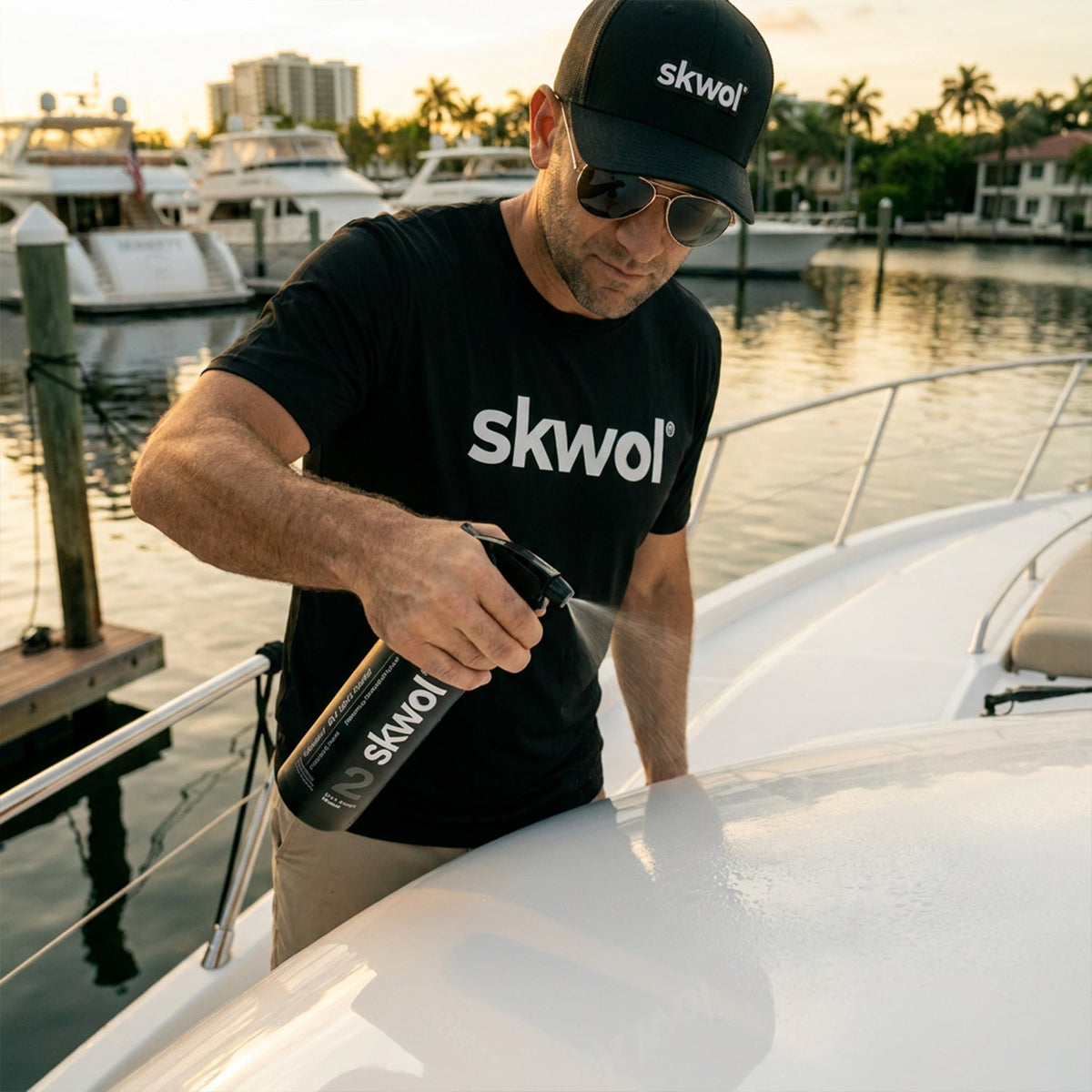
In the SKWOL range, AF-S Marine Sealant is the current spray-and-buff protection product. Check its directions and your finish manufacturer's requirements before use. Its product category alone does not establish a lifespan, UV performance, or compatibility with every painted or coated surface.
For maintenance between fuller detailing sessions, SKWOL High Gloss Detailer is positioned for light contamination and upkeep of already-protected surfaces. Use it within its current instructions and the underlying coating's maintenance guidance. A maintenance detailer and a full protection application serve different jobs in your routine.
What to expect from a dedicated cured coating
Dedicated ceramic coating systems typically come with more specific preparation, application, and curing directions. Follow the particular system rather than treating “true ceramic” as a complete technical specification.
For example, Gtechniq's Marine Ceramic Base instructions call for washing and decontamination, correction if needed, its specified panel wipe, controlled application, and an indoor period after application. The directions also address residue that cures before removal. Those details create practical requirements for workspace, lighting, weather protection, and available time.
This can be a good reason to use a trained installer, especially on a large boat, an unfamiliar finish, or a surface that needs significant correction first. Ask what the service includes, which areas will be treated, what you must avoid during curing, and how future washing and repairs should be handled.
Preparation has to match the condition of the boat
Inspect the finish clean and dry. Protection should follow any required cleaning or correction. A sealant cannot fill a gouge, and gloss-enhancing protection should not be used to disguise a defect you still need to diagnose.
If sound gelcoat is oxidized, test an appropriate correction process first. SKWOL One-Step Oxidation Remover is our compound option; the protection stage follows correction and approved residue removal. If you have marine paint, get the paint maker's approval before using any abrasive.
Avoid building a preparation routine from unrelated videos. A solvent wipe required by one coating may be unsuitable for a nearby material or unnecessary for another sealant. Read both the finish guidance and the chosen product's directions before assembling your supplies.
Compare durability claims carefully
A stated lifespan is only useful when its conditions are clear. Before comparing products, ask what the claim measures: water behavior, gloss, stain resistance, coating retention, or a written warranty. Then ask about the test surface, exposure, washing method, maintenance products, and whether the comparison used the same conditions.
Do not convert a marketing multiplier into a number of months without a defined baseline. Likewise, a coating warranty is not a promise that every boat will remain unchanged for that period. Manufacturer warranties can require particular installation and maintenance arrangements; Gtechniq's marine guarantee, for example, includes certified-installer conditions.
Judge your own maintenance needs after cleaning and inspection. Water behavior is one observation, but it does not establish UV protection or prove that the entire protective layer has failed. If a change persists, check the product maker's troubleshooting guidance before adding more layers or starting abrasive correction.
Keep washing and drying in the plan
No category makes a boat maintenance-free. Remove contamination promptly using approved methods, follow the recommended wash routine, and dry surfaces where water spots are a concern. A water-repellent finish can still retain mineral residue when droplets dry.
Common boat protection questions
Is a ceramic spray the same as a cured coating
The label alone cannot answer that. Compare the specific product's technical instructions, preparation, application, and curing requirements. Do not treat every product using the word ceramic as equivalent.
Can I apply a new protectant over an existing coating
Only when the new product and existing coating allow that combination. Check both sets of guidance before layering. A generic compatibility claim cannot replace a restriction from your coating manufacturer.
Will ceramic protection prevent every water spot
No. Mineral-rich water can leave residue after evaporating from a protected finish. Continue compatible washing and drying rather than relying on beading alone.
For SKWOL's current protection option, review AF-S Marine Sealant. If you are unsure about your paint, existing coating, or application conditions, ask for guidance before buying or applying it.
Share:
How to Remove Boat Water Spots Safely by Surface
How to clean vinyl boat seats without overdoing it