

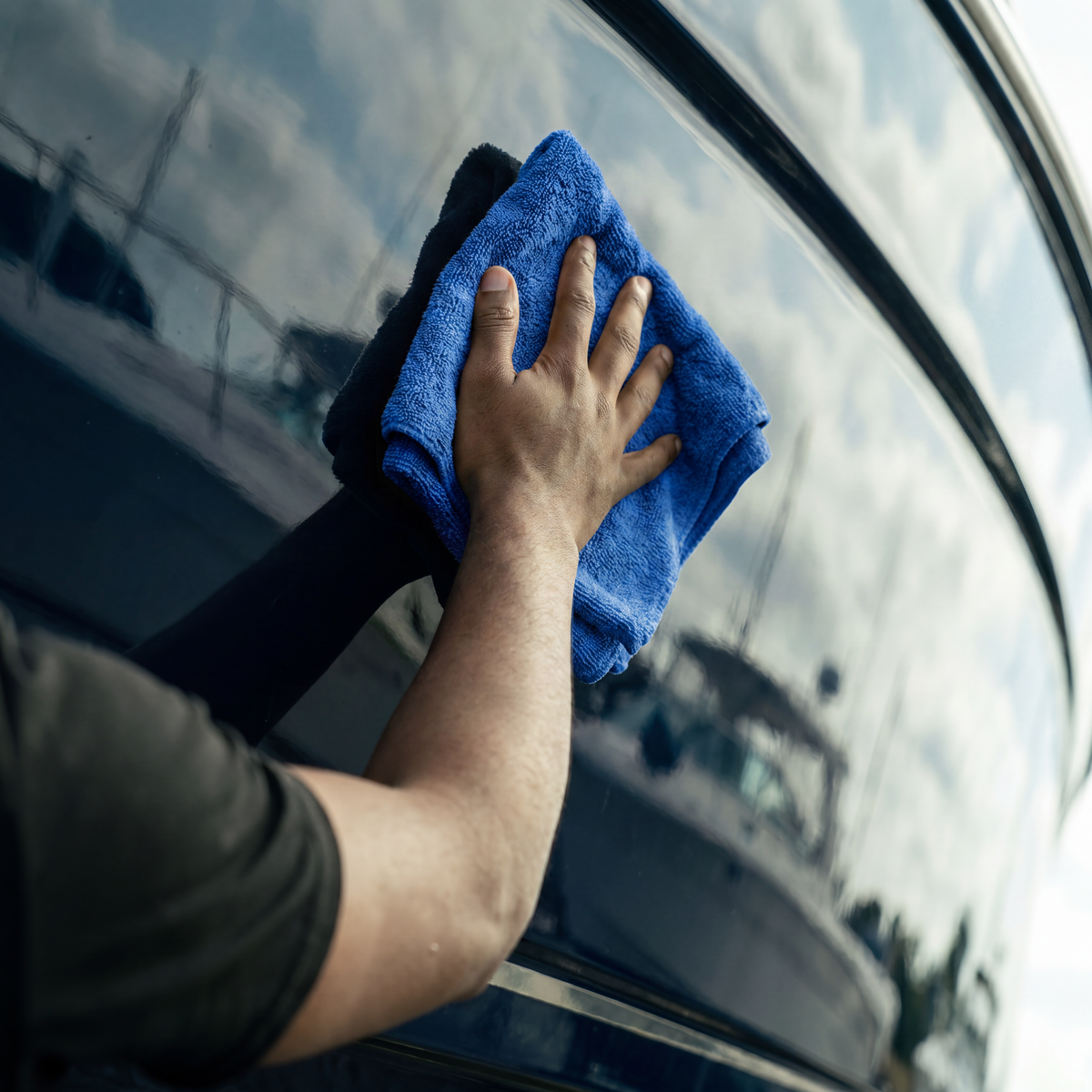
The safest way to remove boat water spots is to identify the surface first, wash away loose contamination, then use a spot-removal method approved for that finish. Start gently and inspect a small test area before treating the rest of the boat. If the deposit disappears but a mark remains, you may need a different repair process rather than another application of cleaner.
A windshield, painted hull, aluminum tower, and clear vinyl enclosure can all have spots on the same day. They do not automatically share a safe cleaning method.
Work out what the spot actually is
Hard water contains dissolved minerals, especially calcium and magnesium. Water can leave mineral residue behind as it evaporates. USGS identifies hard water as a common cause of spots and film on glassware. A freshwater rinse can therefore leave marks of its own if the rinse water is mineral-rich and dries on the boat.
Fresh salt spray and loose dirt may wash off. More persistent mineral deposits can need a dedicated, compatible cleaner. A remaining ring or dull patch after cleaning may be an etched or otherwise damaged finish, although appearance alone is not a reliable diagnosis. Persistent water staining can etch glass.
Before calling a spot permanent, remove the cleaner residue as directed and inspect the surface dry. Wetting a blemish can make it harder to see without fixing the underlying problem.
Prepare before opening a stronger cleaner
Read the boat or component maker's care instructions and the cleaner's label. Identify any existing coating, tinted film, aftermarket treatment, or repair. If the material is unknown, pause for identification.
Move into shade or wait until the surface is cool. Rinse off grit, wash, and gather clean soft towels reserved for this job. Plan where overspray and runoff will go, including onto nearby metal, upholstery, decals, and trailer parts. A cleaner approved for gelcoat may still be unsuitable for those adjacent materials.
Test a small hidden area. Follow the specified dilution, contact time, and removal method. Stop if you see unexpected discoloration, softening, cloudiness, or a change in gloss.
Gelcoat and painted hulls
For smooth gelcoat, begin with a compatible boat wash. SKWOL pH Neutral Foaming Boat Soap is our routine wash option. SKWOL pH Neutral Spot Cleaner is positioned for localized dirt and stains. A neutral pH alone does not establish coating safety or the ability to dissolve a particular mineral deposit. Check the formula's intended uses and surface restrictions.
If deposits remain, choose a dedicated water-spot remover whose instructions cover the exact surface and existing protection. Use the maker's approved cleanup process before checking the result. Avoid treating every persistent spot with a compound: abrasive correction removes finish material and should follow a clear diagnosis.
For paint, identify the coating brand and system before proceeding. Awlgrip's maintenance instructions distinguish between its finishes and prohibit polishing compounds on G/H Line topcoat. A general statement that a cleaner or compound is safe on painted surfaces cannot override the paint manufacturer's restrictions.
Glass windshields and windows
Confirm that the panel is glass rather than acrylic or polycarbonate, and check for films or coatings. Begin with the windshield maker's approved wash and cleaner. If a deposit remains on confirmed compatible glass, use a glass-approved water-spot treatment and protect the surrounding seals, painted frame, and metalwork.
Avoid improvised abrasive pads, scraping, or a gelcoat compound transferred to the glass. If the recommended treatment does not resolve the mark, ask a glass specialist to assess it. Deeply etched glass and damaged films may need professional correction or replacement; increasing pressure with an unsuitable product adds risk.
Clear plastics and enclosure panels
Follow the exact material maker's instructions. ACRYLITE recommends mild soap or detergent, lukewarm water, light pressure, and a clean soft cloth for its acrylic sheet. Its guidance warns that unsuitable cleaners and solvents can damage the surface or cause small cracks known as crazing. Do not assume a household glass cleaner is suitable for acrylic.
Coated clear vinyl can be even more product-specific. Strataglass requires its approved cleaner and polish and warns that unapproved products can damage the material and void its warranty. Keep generic hull cleaners and water-spot chemicals off these panels unless the enclosure manufacturer explicitly approves them.
If clarity remains poor after approved cleaning, check whether the issue is residue, scratching, or aging before trying a stronger product. An enclosure professional can help identify the material and its remaining options.
Aluminum and other metal fittings
Identify whether metal is bare, anodized, painted, plated, or otherwise coated. Do not use the appearance of shiny metal as proof that it is bare stainless steel. Cleaning must suit the finish you actually touch.
TACO Marine advises mild, non-abrasive soap and abundant fresh water for anodized aluminum. It lists strong acidic and concentrated alkaline cleaners among products that can harm the finish. Protect aluminum rails and towers when treating a nearby hull, and remove accidental contamination promptly according to the component maker's guidance.
For stainless steel or other hardware, use its manufacturer's approved process. A metal cleaner is not automatically safe for neighboring paint, and runoff can carry residue into areas you did not intend to treat.
Clean up according to the product instructions
Acid-based removers can help dissolve some mineral deposits, but compatibility depends on the formula, concentration, contact time, surface, and coating. Follow the label's rinsing, washing, or specified neutralization procedure. Do not invent a baking-soda mixture or assume a pH-neutral soap automatically neutralizes every acid residue.
Never mix cleaning products. In particular, keep acidic cleaners away from bleach and bleach-containing mildew removers. CDC guidance warns that mixing bleach with acidic cleaning agents can release chlorine gas. Use the label's protective equipment and ventilation precautions.
Before applying protection, complete the protectant's required preparation and drying steps. Whether an existing coating needs replenishing depends on the products and treatment used; a water-spot cleaner does not universally strip every protective coating.
Reduce the next round of water spots
Rinse after use, wash when needed, and dry compatible surfaces with clean soft towels before rinse water evaporates. Star brite's boat-wash instructions specifically include drying to avoid spots. Work in sections when heat makes a full-boat wash difficult to control.
Maintain protection approved for each surface, but keep drying part of the routine. Gtechniq notes that hydrophobic surfaces, including waxed, sealed, and coated finishes, can still show residue when dirty or hard water dries on them. Water beading does not mean the water contains no minerals.
Common boat water spot questions
Can I use vinegar on every surface
No. Use vinegar only where the component manufacturer's guidance specifically allows it, following that guidance. A household ingredient still needs a compatibility check. Never mix vinegar or other acidic cleaners with bleach.
Why is the spot still visible after cleaning
Remaining residue, etching, scratches, and coating damage can look similar. Inspect the clean, dry surface before repeating treatment. Contact SKWOL with dry photos, the material, and the products already used to discuss an appropriate next step.
Share:
How to Remove Gelcoat Oxidation Without Overcutting Your Boat
Boat Ceramic Spray vs Wax and Cured Ceramic Coatings