

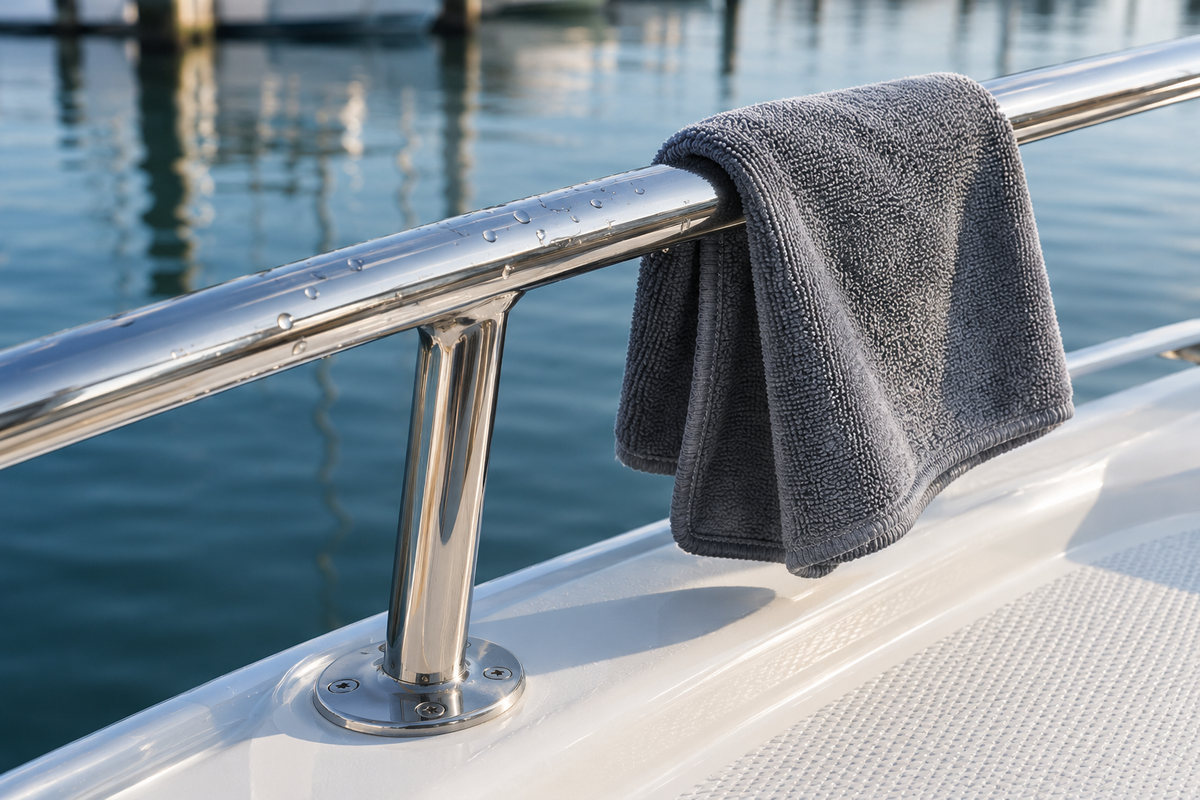
Fresh water, mild soap and a soft cloth are the starting point for routine stainless steel care. AI-generated illustration.
Stainless steel rails get a steady dose of salt spray, hand marks and dried water spots. A fresh-water rinse, gentle wash and soft towel are the place to start. Routine cleaning does not have to become a polishing job.
Why stainless still needs washing
Stainless steel gets its corrosion resistance from a thin, chromium-rich protective film on its surface. It is corrosion-resistant, not corrosion-proof. Chlorides in salt can contribute to localized corrosion, especially where deposits and moisture collect.
Regular washing removes those deposits. Pay attention to the underside of rails, around mounting bases and at joints, rather than cleaning only the visible top surface.
A simple rail-cleaning routine
Follow the boat or rail manufacturer's care instructions, particularly if the metal has a coating or special finish.
- Rinse first. Use fresh water to flush away loose dirt and salt. Wet the underside of the rail and the areas around its fittings, too.
- Wash gently. Use mild soap permitted for the hardware, mixed as directed, with a clean soft cloth or sponge. Work on a cool surface and do not let the wash solution dry. If there are visible polishing lines, wipe gently with the existing finish rather than across it.
- Rinse thoroughly. Remove the soap with fresh water, including residue around the bases and joints. Leaving cleaner behind is not an extra layer of protection.
- Dry with a soft cloth. Wipe the rail and accessible fittings with a clean, dry microfiber towel. Use a towel that has not picked up grit or metal particles from another job. Our guide to caring for boat-detailing towels covers keeping them ready for the next wash.
For the rest of the boat, Skwol® pH Neutral Foaming Boat Soap is our routine wash option. Follow the bottle directions and use it on rail hardware only where the manufacturer's guidance permits it.
What to leave out
Skip ordinary steel wool and steel brushes. They can leave iron particles behind that rust on the stainless surface. Abrasive pads can also change the finish.
Avoid chlorine bleach and harsh household cleaners for this routine. Chloride-containing cleaners can stain or pit stainless steel. A more aggressive cleaner is not automatically a better match for a brown mark.
If brown spots remain
Persistent brown spotting can have different causes, including surface staining or contamination. Color alone does not tell you which one you are looking at.
If gentle washing does not clear it, ask the rail or boat manufacturer for the correct next treatment rather than scrubbing harder. Pitting, cracks or loose fittings need assessment, not another pass with a polishing cloth.
Make the rails part of your regular boat wash, especially after saltwater exposure. Rinse, wash, rinse and dry is a useful routine to keep simple.
Share:
How to Clean Bird Droppings Off Your Boat
Should You Wax or Polish a Non-Skid Boat Deck?