

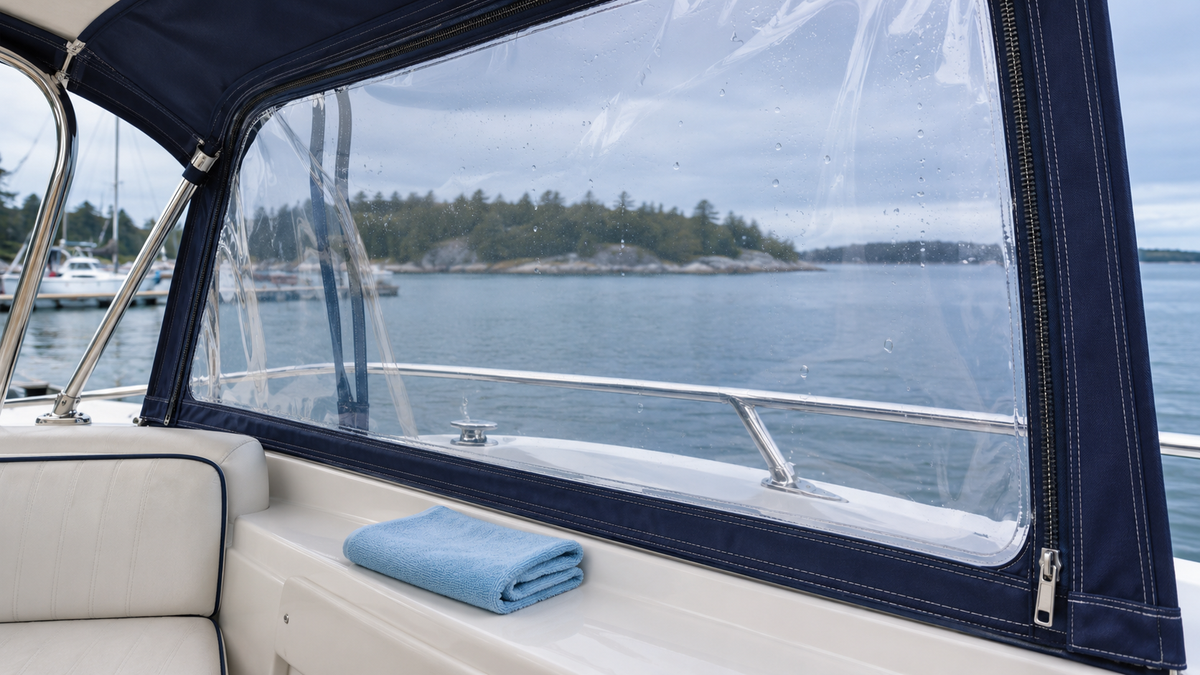
AI-generated editorial illustration; not a cleaning demonstration or a product test.
A clear boat window can look like glass without being glass. Rigid acrylic, polycarbonate and flexible clear vinyl need different care, and a protective coating can change the instructions again.
Before wiping away salt spray or reaching for a glass cleaner, identify the panel. The aim is to remove contamination using a method the window manufacturer permits, without turning routine cleaning into an unnecessary restoration job.
Identify the material before choosing the cleaner
Start with the boat's paperwork, the enclosure invoice or the installer. Ask for the material name, product grade and any protective coating. If a panel has been replaced, the original boat manual may not describe what is fitted now.
These distinctions matter:
- Acrylic care instructions may differ between an uncoated sheet and an abrasion-resistant coated version.
- Polycarbonate requires its own compatibility guidance. Approval for another clear plastic does not carry over.
- Some coated flexible-vinyl windows require a specific manufacturer-approved cleaner and protective treatment.
“Plastic safe” on a bottle is not enough to resolve those differences. Check both the cleaner's directions and the current care instructions for your exact window. If the documents disagree, ask the material supplier before using the product.
Remove loose contamination before wiping
Dry rubbing can drag grit across a plastic surface. Marine-window care guides commonly call for rinsing away loose contamination before contact cleaning.
Follow the panel's rinsing instructions using clean water. Do not start by scrubbing dried salt or dust with a dry towel. If debris remains attached, use the approved cleaning method rather than a scraper or an improvised abrasive pad.
Treat the surrounding canvas separately. A cleaner suitable for the fabric is not automatically suitable for the window sewn into it. Plan the job so adjacent materials receive only treatments their own care instructions allow.
Use the approved method, without adding extra products
Read the full cleaning procedure before starting. Check the cleaner, dilution if specified, application material, working conditions, removal and drying instructions.
If the guide permits a mild soap solution, follow that method. If it requires a specific care product, do not replace it with a general boat soap, household glass cleaner or plastic polish because the label sounds similar.
Use the soft cleaning material the window manufacturer recommends and apply gentle pressure. A microfiber label alone does not establish suitability for every panel, and a cloth carrying compound or grit is a poor choice for window care.
Keep suitable window cloths separate from correction work. Our guide to caring for microfiber boat-detailing towels covers sorting, washing and inspecting towels; the window's own instructions still decide what may touch it.
Finish the rinse and drying steps
Complete the specified removal or rinsing step instead of leaving cleaner on the panel while moving to another job. Use the prescribed drying method. Do not assume a squeegee, paper towel or vigorous buffing is appropriate simply because it works on household glass.
Where a coated window requires a protective treatment, use the approved product and schedule. A hull sealant, upholstery protectant and window-care treatment are not interchangeable just because each is described as protective.
Do not add another treatment unless the window manufacturer confirms it is suitable.
Treat persistent haze as a separate question
A mark that remains after approved cleaning is not automatically dirt. Cloudiness, scratches, fine cracking and coating damage can require different assessments.
Do not escalate directly to stronger solvents, gelcoat compound, sanding or machine polishing. Abrasive restoration can damage some coated panels or distort the view through them.
Photograph the affected area and record the products and methods already used. Ask the manufacturer or a marine-window fabricator to assess persistent haze or visible damage before attempting restoration. Do not assume every defect can be polished out, or that every cloudy panel needs replacement.
Keep the instructions for next time
Save the material details, current care guide and any written advice in your boat-care log.
For removable enclosure panels, also confirm how they should be handled and stored. Do not assume an attached clear window can be folded with the canvas. Our boat-cover storage guide covers the fabric side of the job.
A useful window-care routine is specific and repeatable: know the material, remove loose contamination, follow the approved cleaning method and stop when the cleaning is done.
Share:
How to care for microfiber boat-detailing towels
How to clean fish blood from your boat without overdoing it